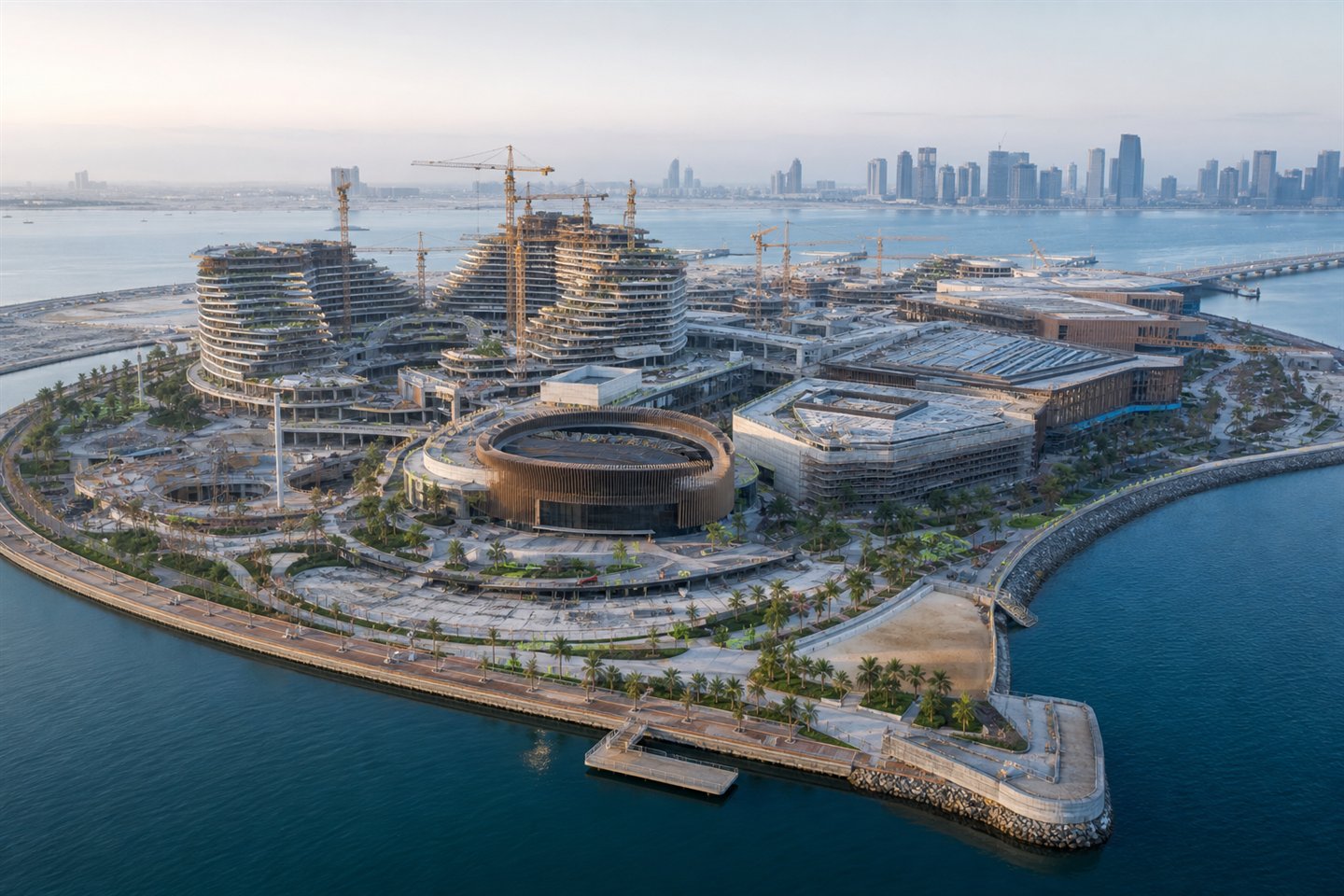
The casino development story is expanding in geographic scale while shrinking as a share of the architectural brief. The projects attracting the most attention in 2026 are not simply larger gaming floors. They are transport, hotel, convention, entertainment, retail and public-realm systems whose economics include gaming.
That wider definition makes comparisons difficult. MGM Osaka is a nationally significant Japanese tourism project on an artificial island. Wynn Al Marjan Island is a luxury resort entering a newly regulated UAE gaming environment. New York’s three downstate licences attach casino expansion to existing urban sites and unusually explicit community and delivery commitments.
Current disclosed milestones
- MGM Osaka: MGM said on 29 July that the project remains on track for a 2030 opening.
- Wynn Al Marjan Island: Wynn’s Q2 2026 investor material points to September 2027.
- Downstate New York: three licences became effective on 15 December 2025; independent monitoring forms part of the commitment structure.
Osaka: the infrastructure test
MGM Resorts and ORIX are developing the Osaka integrated resort on Yumeshima. MGM’s original project outline described 2,500 hotel rooms across three hotel offerings, substantial conference and exhibition space, a theatre and a broad hospitality programme. That early outline should be read as a development concept rather than a guarantee that every dimension remains unchanged, but it makes the core idea clear: the property is designed as a tourism and business-events destination.
In its second-quarter 2026 results, MGM called Osaka the largest integrated resort in the world and said it remained on track for 2030. Its filings also show a substantial continuing funding commitment and a shareholder structure that evolved in 2026. Those are reminders that a multi-year development cannot be understood from the construction schedule alone. Capital contributions, partner alignment, land preparation, transport interfaces and national regulatory conditions all have to remain synchronised.
Yumeshima’s island location intensifies the systems question. Visitor movement, utilities, resilience and event-day capacity are not peripheral to casino performance; they are prerequisites for the resort’s tourism case. The 2030 opening target is therefore a network deadline as much as a building deadline.
Al Marjan Island: the market-creation test
Wynn Resorts’ latest investor presentation says Wynn Al Marjan Island is making significant progress toward a September 2027 opening. The project is being built in Ras Al Khaimah, where resort construction, recruitment and the development of a regulated commercial gaming market are advancing in parallel.
This creates a distinctive execution problem. An established casino jurisdiction can draw on a deep pool of experienced staff, suppliers, regulators and service businesses. A new jurisdiction has to build much of that institutional capacity while the resort itself is built. Wynn’s disclosed hiring progress—425 employees by the end of the second quarter, largely in senior and general-and-administrative roles—shows the operating organisation forming well before doors open.
The project will also be judged on whether it expands Ras Al Khaimah’s destination appeal rather than simply redistributing existing visitor spend. Aviation access, resort clustering, luxury positioning and the credibility of the federal regulatory framework will shape that outcome.
The tallest tower gets the rendering. The harder project is the invisible one: regulation, transport, workforce, systems integration and a credible reason to visit when novelty fades.
New York: the commitments test
New York’s Gaming Commission considered and awarded three downstate commercial gaming licences in December 2025: Bally’s Bronx, Metropolitan Park in Queens and Resorts World New York City. Unlike a single remote destination build, these projects sit inside dense urban and community systems, making land use, mobility, local benefits and construction commitments central to delivery.
The Commission’s final meeting record says each approval was conditioned on acceptance of an independent third-party monitor for at least five years. The monitor is intended to help ensure that commitments made during the application and community-review processes, along with legal and regulatory standards, are satisfied.
That condition changes how progress should be reported. Announced investment and amenities are not merely launch-period messaging; they become part of a monitored delivery story. The key questions are which commitments are binding, when they fall due, how changes are approved and what remedies exist if the final build differs from the application.
Three projects, four common risks
- Schedule interface risk. A resort may be on programme while adjacent transport or public works are not.
- Capital and scope risk. Inflation, financing conditions and design development can alter sequencing or amenity mix.
- Regulatory execution. A licence does not eliminate continuing approvals, technical standards, compliance staffing or testing.
- Demand composition. Visitor totals matter less than the mix of hotel, convention, entertainment and gaming demand sustaining the asset through the week and across seasons.
How Elvari Scope will track delivery
Our project tracker distinguishes four layers: official approval, company guidance, physical progress and independently verifiable operation. A target date remains a target until the operator opens the property and the regulator authorises the relevant activities. A rendering remains an intention until procurement and construction make it real.
We will therefore watch milestone language closely. “On track” is useful guidance, but it is not the same as completion. Hiring counts show organisational build-out, but not operational readiness. A licence confirms permission subject to conditions, not the satisfaction of every future commitment.
That discipline matters because destination projects are stories of sequencing. Osaka must join its island infrastructure to a national tourism proposition. Al Marjan must assemble a resort and an operating ecosystem together. New York must translate winning applications into monitored urban delivery. Each will reveal a different part of the modern integrated-resort model.
Forward-looking information: Opening dates, costs and scope can change. Dates in this report are attributed to official or company sources and are not Elvari Scope forecasts.